
Exhibitor Tips
How do you sell from your stand at a fashion trade show?
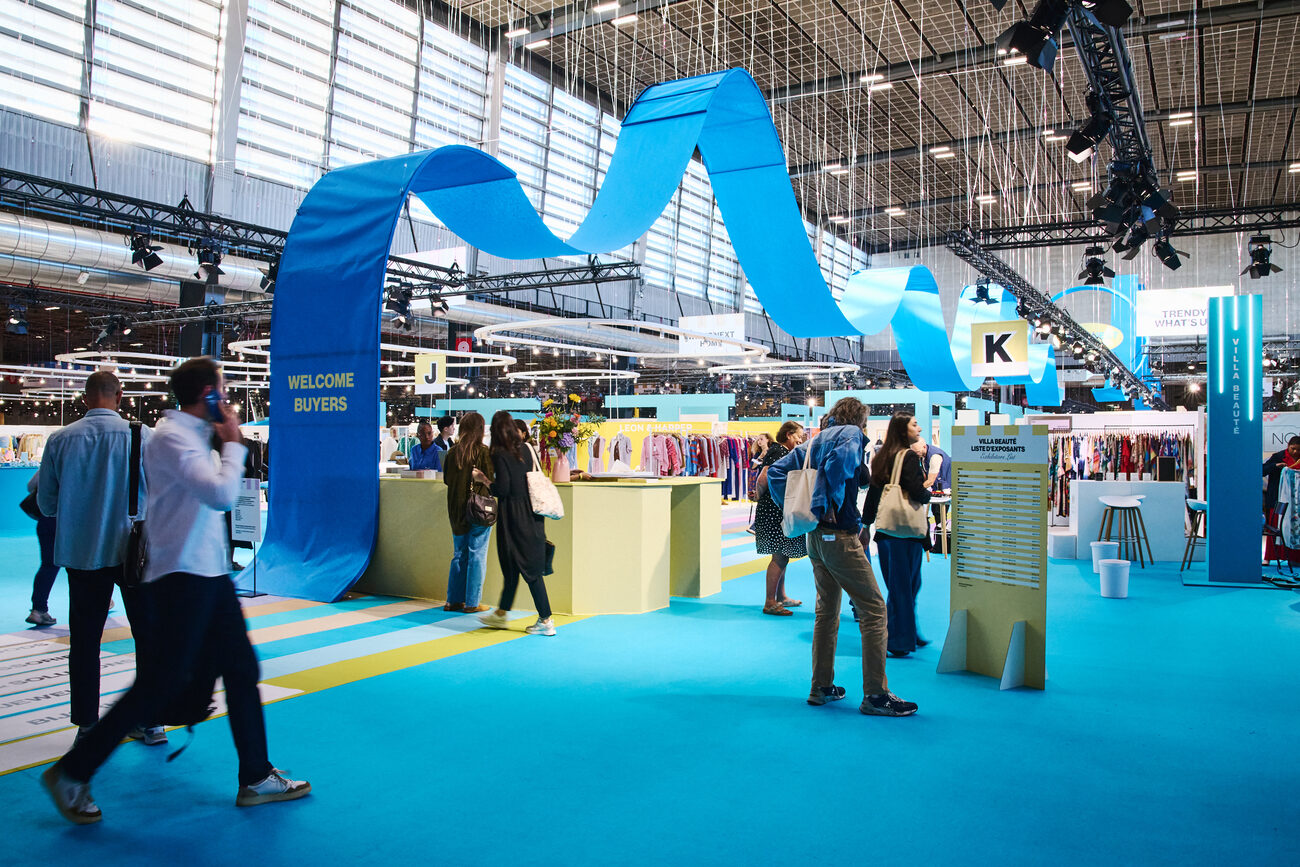
You sell from your stand at a fashion trade show by preparing before the doors open: edit your collection to a clear story, lead with three or four hero products, price for the market with a 2.7x retailer margin, quote all-in with shipping included, keep your documents ready, stay approachable, and follow up within a week. The stand is a tool; the selling is the preparation.
A stand at a good trade show isn't cheap, and the show won't sell for you. The brands that leave with orders and the brands that leave with a stack of business cards do a lot of small things differently. Almost all of them happen before the doors open.
We've prepared a lot of brands for European floors. Here's what separates the ones who convert from the ones who decorate.
How do you make your collection readable?
A readable collection is one a buyer can grasp in seconds. A buyer walks your aisle in seconds, and if your stand reads as a wall of product with no clear idea, they keep walking.
Edit hard before you arrive. Bring the pieces that say what your brand is. A tight rack reads faster than a full one, and fast to read is what wins a busy buyer's attention. The instinct to show everything you've ever made is the instinct to resist.
What should you lead with on your stand?
Lead with hero products. Inside that edit, build a hierarchy: every collection has hero products, the three or four pieces that are unmistakably you and that a buyer remembers. Put them where the eye lands first.
The heroes pull the buyer in. The supporting range keeps them there and gives them the depth to build an order. A stand built around heroes has a path through it; a flat stand where everything competes for attention has none.
How do you explain your brand to a buyer?
Your brand DNA should fit in one sentence. Before the show, get clear on it and be able to say it in a single line: who you are, who it's for, why it's different. If you can't explain it simply, the buyer can't repeat it to their team, and they won't take the risk.
The brands that travel well know exactly what they are. That clarity shows up in the edit, in the hierarchy, and in the way you talk at the stand. Rehearse the one line until it's natural.
How should you price for the European market?
The 2.7x rule sets your wholesale ceiling: take the price a European shopper will pay and divide it by 2.7. This is where most first-timers lose the order, so read it twice.
European retail runs on a markup of roughly 2.7 times the wholesale price. A retailer who buys from you multiplies your wholesale price by about 2.7 to set the shelf price. That multiple covers their costs, their margin, VAT, and the risk of carrying a brand they don't know yet.
So work backwards. Take the price a European shopper will actually pay for your product, divide by 2.7, and that's roughly the wholesale price you can charge. If that number doesn't cover your costs and leave you a margin, the product isn't ready for this market yet.
Here is the rule worked through. Say a European shopper will pay 90 euros for your shirt. Divide by 2.7 and your wholesale ceiling is about 33 euros. If you can make it, ship it and still profit at 33, you have a business here. If your cost lands at 40, the shelf price climbs past 100, and a buyer who can stock a known brand at 90 won't take the bet on you.
The classic mistake is pricing from your home market. An Indian retail price that looks fine in Delhi often won't survive a 2.7x markup in Paris: the shelf price lands too high for what the product is, and the buyer passes. Price for the market you're selling into, and always leave the retailer a real margin. A brand that prices so tight there's no room above it is as hard to stock as one that prices too high.
Should your wholesale price include shipping?
Yes: quote landed and all-in, because a wholesale price with no shipping is not really a price.
A small boutique can't calculate your freight and customs on the spot. So a number that leaves those out is, to them, a product with no price at all. They won't gamble on a figure they can't finish. It's like being shown a product and not being told what it costs.
Quote landed and all-in wherever you can: include shipping, and be clear about duty. Delivered terms (DDP) remove the buyer's biggest unknown and make it easy to say yes, especially for the small shops who don't have a logistics desk to work it out. The easier you make the maths, the faster the order.
What documents should you bring to the stand?
Your supporting documents should cover prices, terms, and dates. Buyers decide fast and want the paperwork clean, so bring it all, in order: a linesheet with prices and minimums, your lookbook, your terms, delivery dates, and any certifications the market needs.
When a buyer asks for your minimum order or your lead time, the answer should take five seconds, not five emails after the show. Fumbling for documents reads as not ready, and not ready loses orders. Have everything printed and on your laptop, so you can hand it over on the spot instead of promising to send it later.
How should you behave on your stand?
Your attitude should be positive and approachable, and it costs nothing, yet plenty of brands still get it wrong. Stand up. Look up. Greet people. A buyer can feel a closed stand from across the aisle.
Be positive and approachable. You don't need the shark pitch, you need to be a human who's glad they stopped. Keep your face off your phone, don't eat at the stand, and don't let a slow hour show. The buyer you ignore at 4pm on a quiet day might be the account that makes your season.
When should you follow up after the show?
Follow up within a week, because the order usually closes after the show, not on the floor. Take clear notes on every serious conversation, and follow up within a week while you're still fresh in their mind. The brands that follow up fast win the business the brands that wait lose.
How do you pick the right show?
Picking the right show means choosing the floor your buyers actually walk, and that is half the work. A craft accessories label and a contemporary fashion brand belong at different shows, sometimes in the same city in the same week. Put a great stand in front of the wrong buyers and none of the above matters.
It's the first thing we fix before any of the rest. Get the show right, then get the stand right, and the maths starts working in your favour.
Quick recap
Do
- Edit the collection down to a clear story.
- Lead with three or four hero products.
- Be able to say your brand DNA in one sentence.
- Price for the market, leaving the retailer a 2.7x margin.
- Quote all-in, shipping included, duty clear.
- Carry every document, printed and digital.
- Stay positive, present and approachable, and follow up within a week.
Don't
- Bring the whole catalogue and hope something lands.
- Spread everything evenly so nothing stands out.
- Make the buyer work out what your brand is.
- Price from your home market.
- Leave freight and duty for the buyer to guess.
- Promise to send the linesheet later.
- Hide behind your phone when the floor goes quiet.
None of this is complicated. All of it is the difference between a stand that pays for itself and one that doesn't. Get the edit, the pricing and the attitude right, and a good show does the rest.
We prepare our brands on exactly these points before every show, and we'll tell you honestly when a collection or a price isn't ready yet. If you want to exhibit in Europe, see the shows we represent, read our pieces on Who's Next and Première Classe, then book a 30-minute call or start your application.