
Brand Strategy
How do you find a showroom in Paris during Fashion Week?
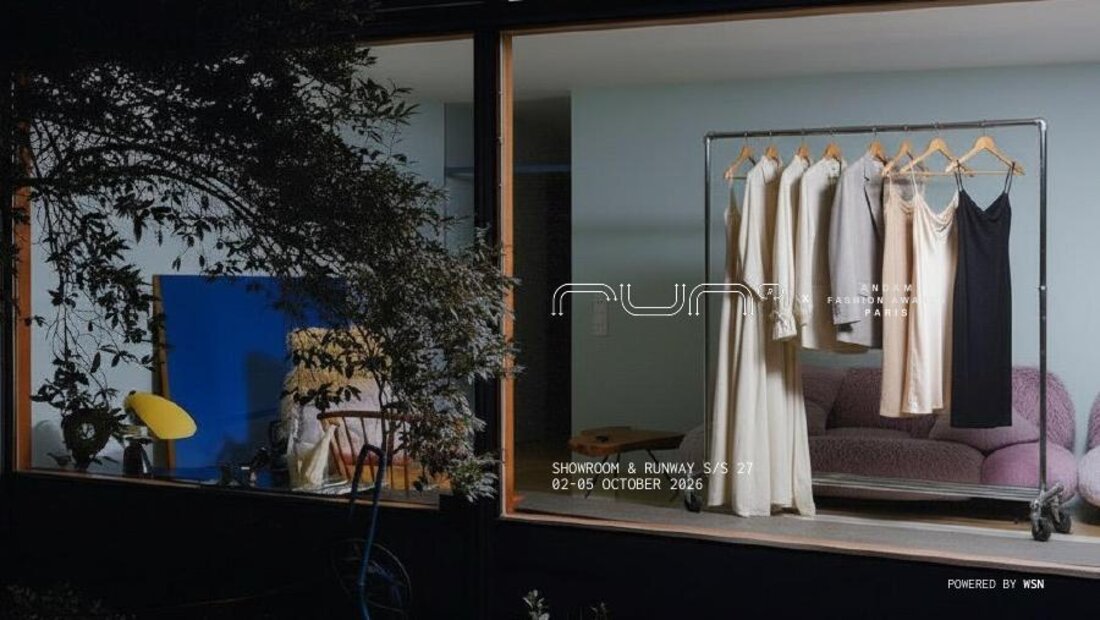
To find a showroom in Paris during Fashion Week, use the Modem professional directory to identify the multi-label showrooms that fit your category, match their curation honestly, and approach them months early with a clean linesheet and proof of sell-through. Or skip the cold search and take a no-commission room built for emerging brands, like RUN x ANDAM. A good showroom is one of the fastest ways into European wholesale: it puts your collection in front of a buyer who already trusts the showroom's eye, with a sales team that knows the accounts. But getting the right one, and getting in, is its own skill. Here's how it actually works.
What is a fashion showroom?
A fashion showroom is a curated space with its own sales force, carrying a coherent set of complementary brands. Each one has its own client book and its own point of view. You don't just rent a rail, you join a selection, and the showroom sells your collection to its buyers on your behalf. We cover where it sits in the wider picture in our guide to wholesale in Europe.
Where do you find Paris showrooms?
You won't find the good ones with a generic search. The industry uses a directory.
Modem is the reference tool for finding showrooms. It is Modem (modemonline.com), the professional directory for fashion. It lists multi-label showrooms, trade shows and fashion weeks, press offices and stores, and for each Paris Fashion Week season it maps the designer showrooms with their venues and contacts. Start there: filter by Paris, by the season you're targeting, and by the kind of showroom that fits your category.
Fashop maps the stores that showrooms sell to. Once you know which showrooms to chase, you'll want to understand their accounts. Fashop is a B2B prospecting tool built on a qualified, regularly updated database of multi-brand ready-to-wear and footwear stores. It's now part of the WSN group, the people behind Who's Next and Première Classe, so it plugs into the same wholesale ecosystem. Use it to see which retailers carry brands like yours, and to sanity-check whether a showroom's client book actually overlaps with your target stores.
Why does matching the showroom's curation matter?
Matching a showroom's curation is the one rule that decides everything, and it is where most brands waste their season. A showroom isn't a neutral space for hire. It's a selection, and its buyers come because they trust that selection. If your brand doesn't belong next to the others, the showroom won't take you, and even if it did, its buyers wouldn't bite.
Do the homework before you pitch anyone. Look at the brands a showroom already carries. Look at the stores that buy from it. Look at the price level, the aesthetic, the market. If your collection sits naturally in that group, you have a case. If it doesn't, you're pitching the wrong room, and a polished pitch won't fix a bad fit.
Be honest with yourself here. A showroom that's slightly above where you are today is worth chasing. One that's a clear mismatch is a waste of both your time and theirs.
How do you approach a showroom?
To approach a showroom, come prepared with proof of traction, because showrooms run on trust and think in seasons, not one-offs. They mostly take brands that already have some wholesale activity and decent sell-through, since their own buyers expect a safe bet. Bring four things:
- A clear line on your brand DNA, and who already stocks you.
- A clean linesheet with wholesale prices, minimums and delivery dates.
- Real sell-through numbers if you have them, and any press.
- A reason this showroom specifically, not a mass email to forty of them.
Mind the calendar when you approach. Wholesale runs roughly a year ahead, and showrooms book their line-up early. If you want a spot for a season, start the conversation months before, not the week of the shows.
What does a showroom cost, and how do you negotiate it?
A showroom usually charges you two ways, and you can move both.
The fixed fee is a seasonal or annual participation cost (the “showroom fees”) for your space and the sales service. You pay it whether you sell or not.
The commission is a cut of the sales the showroom writes for you, usually around 15 to 20%. You only pay it on what sells.
Trade one against the other based on your volume. If you expect strong sales, the commission will cost you more than the fee over a season, so push the commission down and accept the fixed fee. If you're testing the market with modest volume, the fixed fee is your bigger risk, so push that down and concede on the commission. A common, sensible move is to accept their standard commission and negotiate the fixed fee.
Get the hidden costs in writing before you sign: the extra sample set the showroom needs, sample shipping, any partner or activation fees. Those quietly erode the margin you went in to protect. We break down the full wholesale margin maths in our wholesale guide.
What is the RUN x ANDAM showroom?
RUN x ANDAM is the cleanest version of all this. RUN is the WSN platform for emerging designers during Paris Fashion Week. Its showroom-and-runway edition, RUN x ANDAM, runs 2 to 5 October 2026 in the Jardin des Tuileries, right next to Première Classe, in collaboration with the ANDAM Fashion Awards.
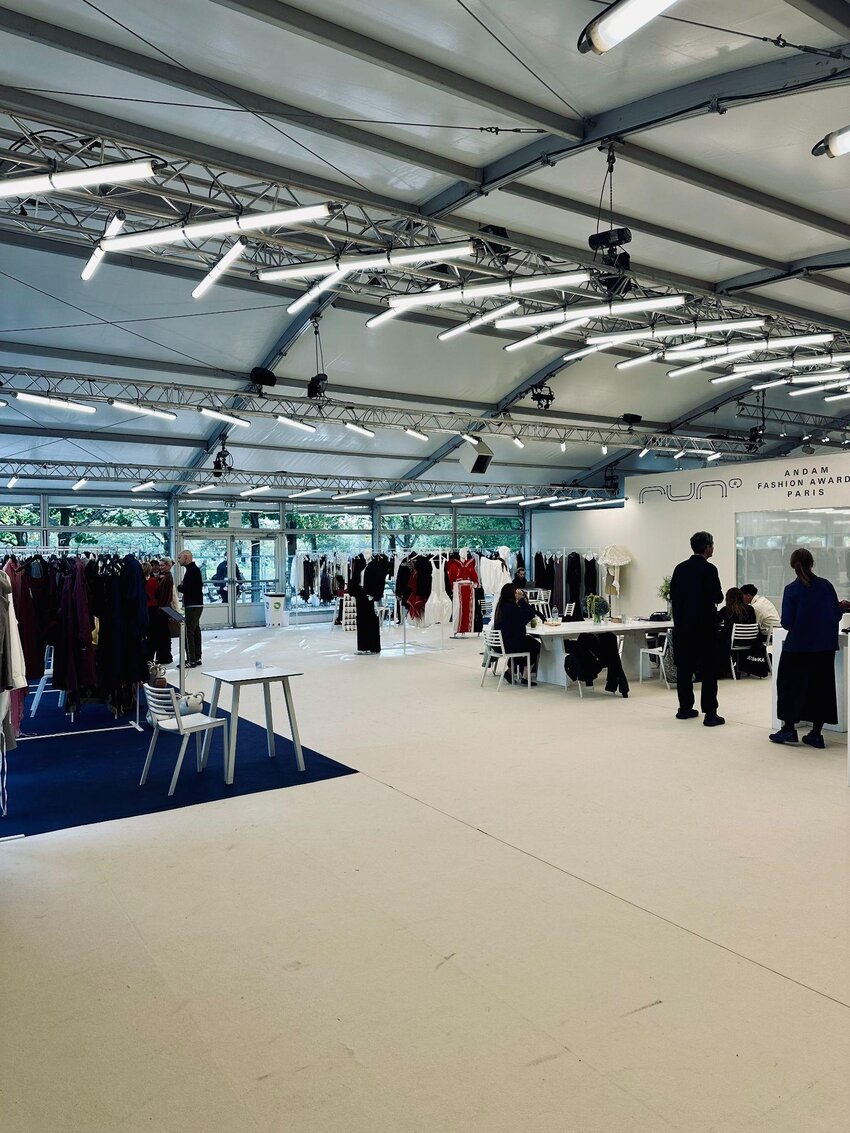
Two things make RUN x ANDAM stand out against a classic showroom, and they are the whole point.
RUN charges no commission on sales. It takes a flat participation fee and no cut of your orders. The showroom package is 5,000 euros all-in, ready-to-wear or accessories, with furniture and the buyers service included. There's a separate runway-presentation package at 15,000 euros for brands that want a show. One clean number, and every euro of the order is yours, no 15 to 20% disappearing off the top.
RUN x ANDAM pre-books your appointments through a dedicated buyers service, and this is the part that changes your four days. You don't set up a rail and hope for footfall. A team prospects the top buyers before the show, books the appointments, welcomes and guides each buyer through the selection during the four days, and follows up on the orders after, with a report to each brand. Last October's edition, run with Likewise Agency, booked more than 200 buyer meetings. The buyers come to your rail, by appointment.
The buyers at RUN x ANDAM are the real ones: 10 Corso Como, Dover Street Market, Selfridges, Isetan Mitsukoshi, Le Printemps, Galeries Lafayette, La Samaritaine, Harvey Nichols, Luisa Via Roma, SKP, Mytheresa and Beams have all come through. The brands it has carried, names like Pressiat, Valette Studio, Germanier, Weinsanto and Benmoyal, tell a buyer exactly what kind of room this is.
ANDAM and its award
The other half of the name is worth knowing. ANDAM, the Association Nationale pour le Développement des Arts de la Mode, is France's leading fashion prize. Founded in 1989, its annual award hands emerging designers a substantial grant and a year of mentoring from an industry leader, and it has launched some of the most important names in fashion.
Its very first laureate, back in 1989, was Martin Margiela; later winners include Anthony Vaccarello, Koché and Marine Serre. Backed by major houses and the French Ministry of Culture, and judged by a jury of industry leaders, an ANDAM association is one of the strongest signals of creative credibility in Paris. That's the room RUN x ANDAM puts you in, at exactly the moment buyers are deciding what to back next.
How do you take part in RUN x ANDAM?
To take part, apply through us: RUN sits inside the WSN family of shows we represent, alongside Première Classe in the Tuileries during Paris Fashion Week. We look at your collection, tell you honestly whether it fits the curation, and handle the application end to end (see all our shows). For a craft-led or design-forward Indian label aiming at serious buyers, it's one of the cleanest first rooms in Paris.
Finding a showroom in Paris comes down to three things: use the right directory, match the curation honestly, and negotiate the fee and commission to fit your volume. Or skip the cold search and take a stand in a showroom built for emerging brands, with no commission and a buyers team doing the chasing.
Tell us about your brand and we'll point you to the right room. Apply here, or book a 30-minute call.