
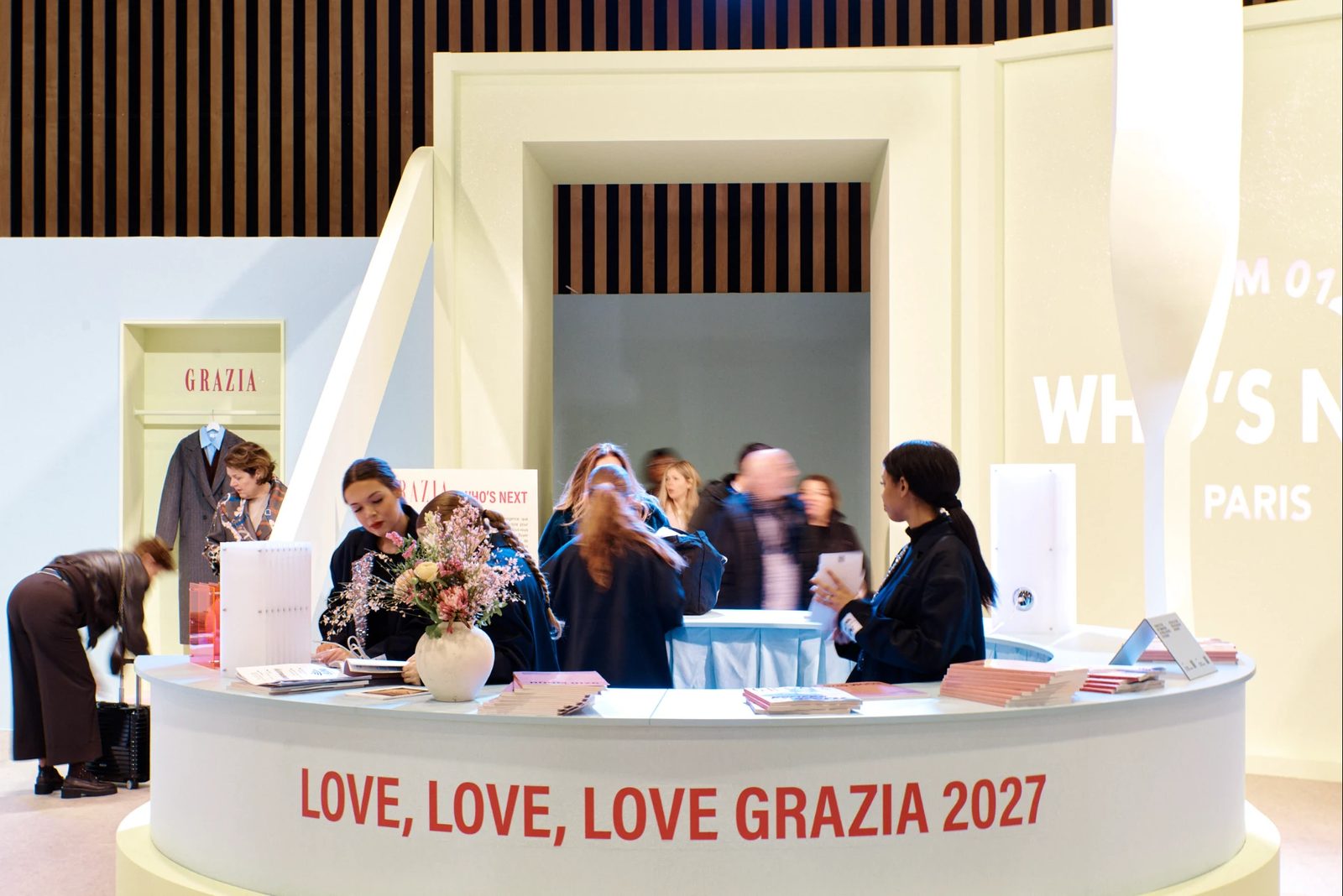
Booking Who's Next is the easy part. Getting your booth ready is where brands win the trip or waste it. This is the prep we walk our brands through before the show: where your stand sits, how to price, how to ship, and how to fill your booth before you arrive.
The short version
- Who's Next is a women-centric show. Keep your display women-focused.
- The floor is sectorized by price and aesthetic, so your neighbours shape your traffic.
- Buyers give you about three seconds. Lead with hero products and a clear story.
- Price in line with comparable brands. Under-pricing or over-pricing confuses buyers.
- Always quote DDP, the landed price with duty included.
- Buyers plan their visits in advance, so cold outreach before the show is essential.
What kind of show is Who's Next?
Who's Next is a women-centric fashion show. Build your booth around womenswear.
Who's Next is built around women's collections, and the buyers walking your aisle are there for womenswear. So your display should read as womenswear. If you also make unisex or men's pieces, present them in a women's context. A booth that reads as menswear on a women's floor loses people fast.
Where will your booth be, and why does it matter?
Who's Next places brands in sectors by price point and aesthetic, so your neighbours affect your traffic.
The organisers group similar brands together. That helps when you're surrounded by labels at your level. It hurts when you're not. A stand next to a €20 to €30 wholesale brand pulls a different kind of buyer, and it can quietly kill your traffic. Tell us your wholesale range early so we can push for the right zone, and price your collection so you land where you want to be placed.
Three metres, three seconds
A buyer decides whether to stop at your booth in about three seconds, across a three-metre opening. Design for that.
Buyers are short on time and moving fast. In those three seconds they should read three things: your hero products, the hierarchy of your collection, and your brand story. Put your strongest, most distinctive pieces where the eye lands first, and keep the rest in clear order behind them. If a buyer has to work out what you are, they keep walking. We go deeper on stand execution in our trade-show do's and don'ts.
How do you build the display?
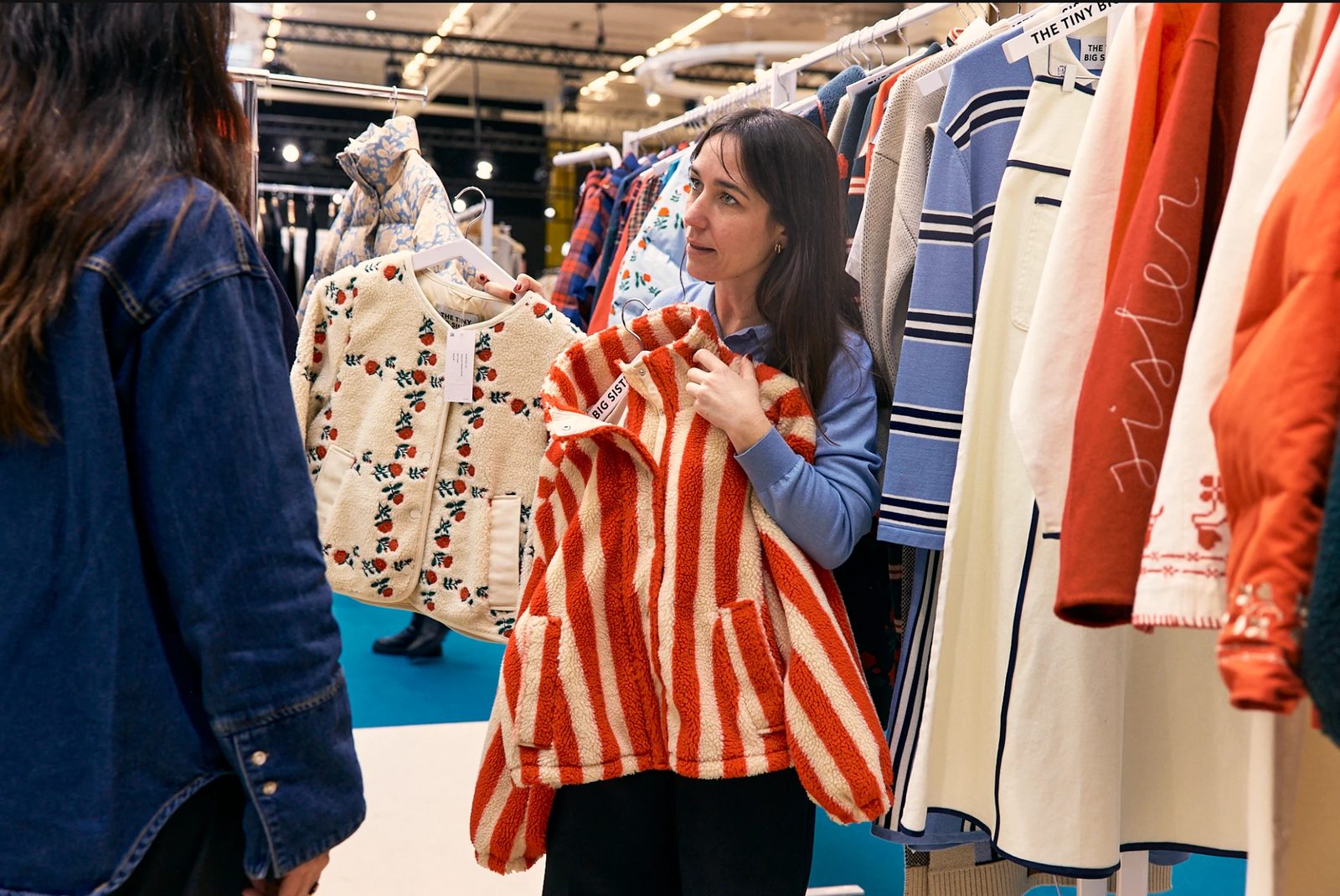
Who's Next booths come with light cotton voile walls you can dress with paste, a Velcro stapler or small pins.
- Walls: light cotton voile. Fix pieces with paste, a Velcro stapler or small pins.
- Mannequins and equipment: order through the exhibitor portal and check availability early, popular items run out. Flag anything missing and we'll point you to outside suppliers.
- Unisex or men's jackets: style them on a mannequin over a dress to show versatility, and wear them on the floor yourself.
- Keep men's and women's pieces apart on the racks. Mixing them kills readability on a women's floor.
What is the Impact category?
If your brand qualifies for the Impact category, your booth gets a sticker and a place on a marked sustainability route in the visitor guide.
Sustainability-minded buyers follow the “impact parcours,” a trail through the show flagged in the visitor guide. The sticker on your booth and your listing on that trail bring those buyers straight to you. If your production story is real, ask us about qualifying.
How do you price for Who's Next?
Don't pick a number in a vacuum. Look at what comparable brands charge and price in line with them.
Before the show, study the labels closest to yours, similar product, similar quality, similar positioning, and set your wholesale prices in that range. Buyers read price as a signal. Come in too low and they question the quality, or wonder why you aren't placed with the cheaper brands. Come in too high and the piece won't sell. Either way you create confusion, and confusion loses the order. Know your average and your range cold, so when a buyer asks, you answer with one confident number.
Two rules to set before you arrive:
- One wholesale price, whatever the quantity. Two pieces or fifty, the same rate.
- Build for the retailer's markup. A European buyer applies a minimum 2.7x markup to set the shelf price. Price your wholesale so the retail number still works after that.
We walk through the full pricing chain, cost to wholesale to retail, in our guide to how to wholesale in Europe.
How should you quote shipping? Always DDP
Always quote DDP, the landed price with duty included. Small European buyers can't calculate freight and duty themselves.
DDP means delivered duty paid: your price covers shipping and customs, so the buyer sees one clean number. A small boutique has no visibility on what your freight and duty will cost, so a price that leaves them out is a price the buyer can't use. Ship with DHL, FedEx or UPS on DDP terms, and they bill the duty component back to you.
And collect each buyer's VAT number and EORI number with every order. The EORI (Economic Operators Registration and Identification) number is what a business needs to import into the EU, and you'll need both to clear the goods.
One tip on the shipping. Set a threshold. Below a certain order value, add a flat shipping fee, say 50 euros. Above it, include shipping in the price. It pushes the buyer to order a little more to cross the line, and it covers your freight, at least partly, on the small orders where DDP would otherwise eat your margin.
How do you get buyers to your booth?
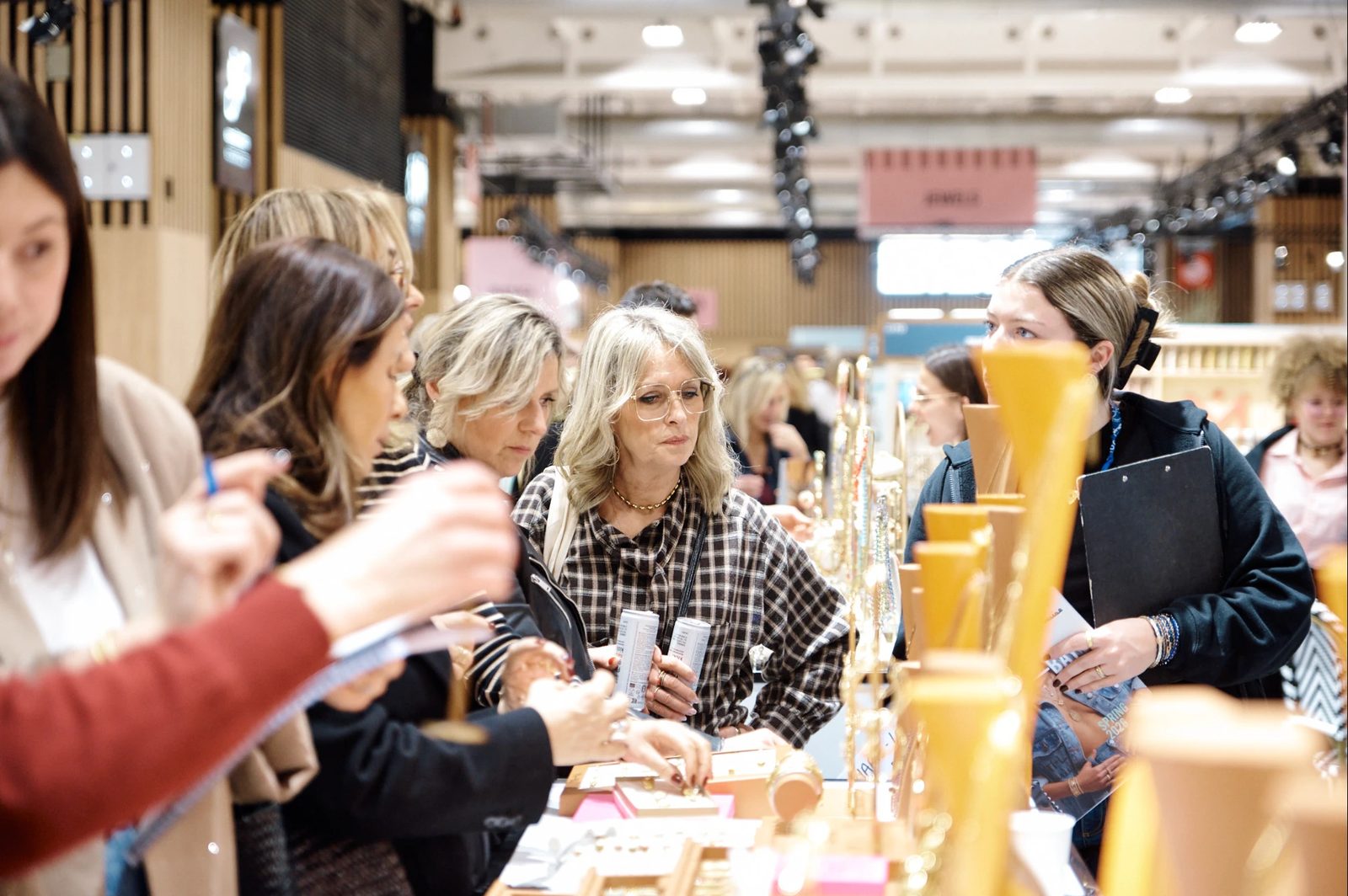
Buyers plan their booth visits in advance, so reaching them before the show is essential. Don't wait for footfall.
Reach the buyers you want before you fly:
- Instagram DM. Owners read their DMs even when they don't reply.
- Email and cold calls. Direct, short, specific.
- Existing contacts: send formal invitations through the exhibitor platform. You get up to around 1,000.
Whatever the channel, the message has three parts: your booth number, the show name, and a short hook tied to that buyer's curation. Give them a concrete reason to stop at your stand. A lookbook dropped in an inbox does nothing on its own.
How do you use your last show's feedback?
If your collection is still in production, fold your last show's buyer feedback into it now, while the range is still open.
The best time to act on what buyers told you is before the line sheet closes. If certain pieces, fabrics or price points drew the strongest response last season, lean into them for Who's Next. We schedule a call a couple of months out to review the display plan and the line sheet before the production and show deadlines lock.
Who's Next rewards the brands that prepare. A booth that reads in three seconds, priced in line with its peers, quoted DDP, with buyers already invited, is the one that leaves with orders.
We prep our brands on all of it. Tell us about your collection and we'll get you ready. Apply here, or book a 30-minute call. For a feel of the floor, read a day at Who's Next.