
An Indian textile exporter sells to Russia by setting up three things: a rupee or rouble payment path through the RBI's Special Rupee Vostro Accounts (with Sberbank on the Russian side), a sea-route logistics partner such as FESCO, and EAEU/EAC certification with Russian-language labelling. India supplies only around 2% of Russia's textile imports today, so the room above that number is enormous, and that under-presence is exactly why the market is worth your attention.
The opening exists because Western brands left after 2022, and a lot of shelf space went with them. Indian makers can fill it, in denim, knitwear and home textiles especially. This guide covers the opportunity, how you get paid under RBI rules, how goods actually move, the rules to clear, and where we can help.
Why Russia, and why now?
Russia's apparel market is large, growing and short of supply. It sits at about 4.4 trillion roubles in 2025, up 8% on the year (Sberbank). When many Western brands exited after 2022, they left gaps that someone has to fill.
India is already moving in. Exports to Russia grew 14.6% in 2024/25 to USD 4.9 billion, and apparel and footwear imports from India rose 1.6 times in 2024 (Sberbank). But India is still only the 9th largest garment supplier to Russia, while China holds close to half the market. The Indian government has said plainly that India's textile share in Russia has to rise from 2%. Translated: the door is open, and almost no one from India has walked through it yet.
Which Indian textiles have the most scope in Russia?
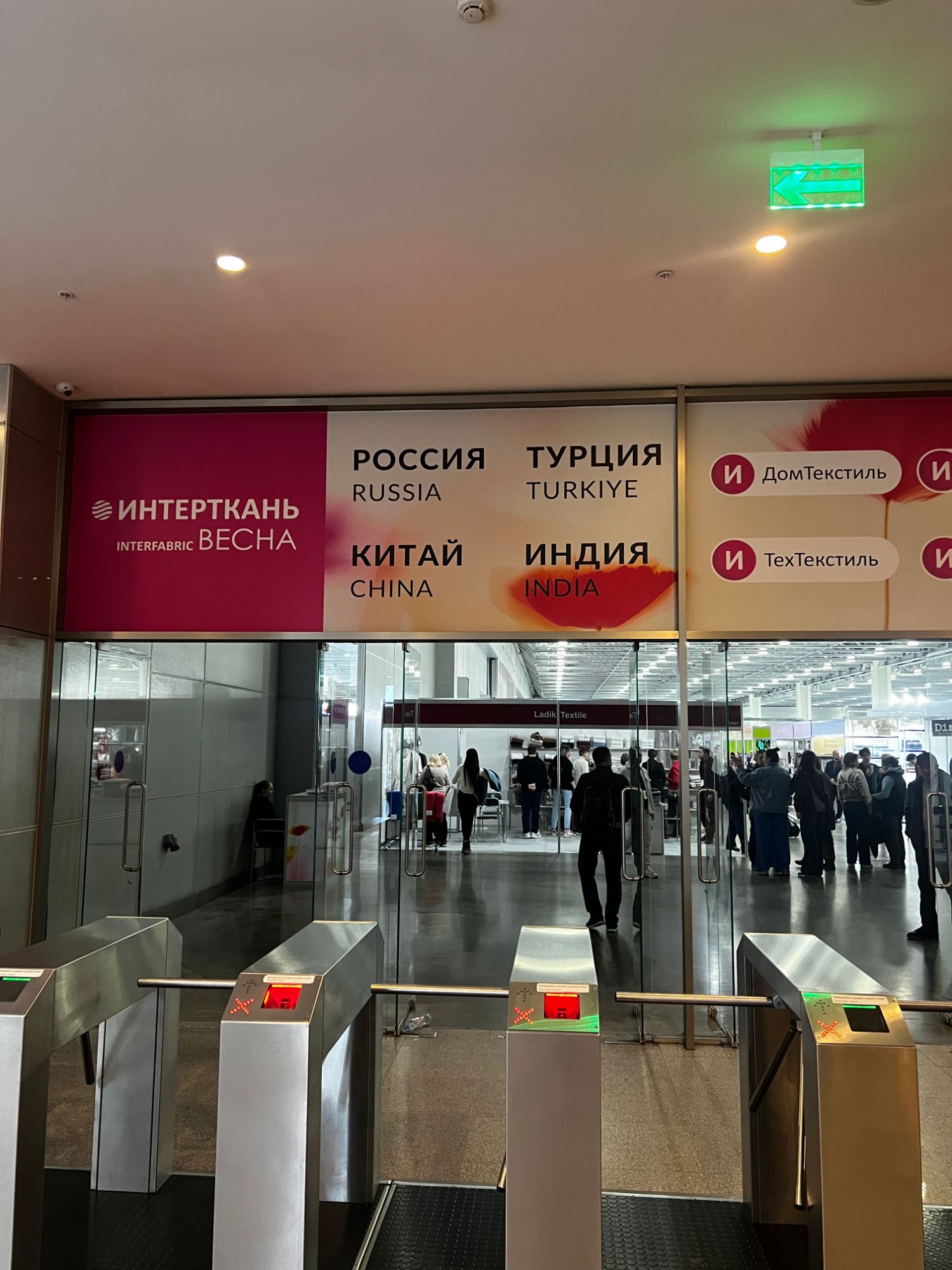
Russia's strongest demand lines up well with what India already does best, led by denim, knitwear and home textiles (Sberbank):
Denim and jeans are the clearest opening. Before 2022, China supplied around 70% of Russia's denim. That share is up for grabs. Indian mills with strength in denim fabric, elastane blends and quality dyeing can realistically take 20 to 30% of the market, according to the Russian Union of Textile and Apparel Industry Entrepreneurs.
Knitwear and mass-market basics are high-volume, repeat-order territory that suits an Indian knits factory. Russian retailers want cotton, knitwear and everyday essentials, and fast fashion now makes up 72% of the market and is growing about 10% a year.
Home textiles are the third strong category for India. India can offer high-quality, competitively priced alternatives to Chinese goods, and there's clear pull for throws, cushions and shawls, especially in the slow-fashion segment where a cultural story beats a cheaper price.
Other categories add to the list. Beyond those three, there's real demand in workwear and uniforms, ethnic-style garments, and sportswear, plus contract manufacturing for Russian brands moving production out of China. The Russian Association of Fashion Industry Participants names India the most promising destination for those orders, for cotton womenswear, menswear, childrenswear and homewear, and increasingly denim and embroidered, handcrafted pieces.
How do you get paid?
You get paid safely through the RBI's rupee trade mechanism. The first question every exporter asks about Russia is how to get paid, and the answer runs through Special Rupee Vostro Accounts.
The Reserve Bank of India has allowed rupee settlement since July 2022. Since then it has let international trade be settled in rupees through Special Rupee Vostro Accounts (SRVAs). An Indian bank holds a rupee account on behalf of a foreign partner bank, and trade is settled in rupees, without converting to dollars (Business Standard). Nine Indian banks hold accounts for Russia trade, among them SBI, UCO Bank, Canara Bank, Union Bank, HDFC, YES Bank, IndusInd and IDBI. In 2025 the RBI streamlined it further, so banks no longer need prior RBI approval to open these accounts.
Sberbank is the Russian-side bank that matters most for this. Sberbank and VTB were the first foreign lenders to get RBI approval and to open special vostro accounts in Delhi for rupee trade. Sberbank has held a banking licence in India since 2010 and runs branches in New Delhi and Mumbai, set up specifically to ease India-Russia trade (Sberbank India). For an Indian exporter, that means a Russia-facing bank with feet on the ground in India to help structure rouble or rupee settlement, the correspondent account, and currency conversion (Sber services).
Set the payment arrangement before you ship, not after. A clean, predictable settlement path is what separates a real Russia business from a one-off gamble.
How do goods get there?
Goods reach Russia by sea or via the land-sea INSTC, because India and Russia don't share a border. Three route systems now carry the trade, and there are named operators on each.
The Eastern Maritime Corridor connects Chennai to Vladivostok. It is a direct sea route between Chennai and Russia's Far East, operational since late 2024, cutting transit from around 40 days to 24 (background). FESCO, the Russian transport group, runs intermodal India-to-Vladivostok services on this side, with a transit time of roughly 30 to 35 days (FESCO).
The western sea route serves European Russia through Novorossiysk and St Petersburg. FESCO's Indian Line West (FIL-W) connects Indian ports to Novorossiysk on the Black Sea, and added Chennai as a feeder port in 2024. FESCO moved more than 11,500 containers on this service in the first nine months of 2024 alone (FIL-W). FESCO has also partnered the Indian logistics group SAKSHAM to develop Chennai-Vladivostok cargo flows (SeaNews).
The INSTC runs via Iran. The International North-South Transport Corridor moves cargo by ship, rail and road through Iran, Azerbaijan and the Caspian up into Russia (INSTC). It's the fastest land-sea option on paper, but parts route through Iran's Bandar Abbas, which carries its own sanctions sensitivities, so check the banking and insurance carefully before you commit cargo to it.
For most textile shipments, the two sea corridors with FESCO are the practical starting point. Sberbank's own India desk publishes route, cost and transit comparisons if you want to plan a lane in detail (cargo routes).
What certification and labelling do you need?
Your product has to meet EAEU standards, because Russia sits inside the Eurasian Economic Union (EAEU). That usually means an EAC declaration or certificate of conformity, with technical documentation and labelling translated into Russian (Sberbank). For textiles, expect conformity requirements around composition, care and, for workwear, things like fire resistance. Build the certification time into your plan; it's not an afterthought.
Russian buyers also prefer a partner with someone on the ground, a local representative, a logistics hub, or at least guaranteed on-site support. Industry associations are the usual way in for certification, government procurement and preferential logistics corridors.
What does a first shipment look like?
A first shipment should be a small pilot, not the whole catalogue at once. The sensible sequence, drawn from Sberbank's own guidance for Indian exporters, is:
- Test 1 to 2 SKUs through a Russian import distributor before scaling.
- Clarify EAC requirements, labelling rules and the import documents you'll need.
- Set up the payment path: rouble or rupee settlement and a correspondent account.
- Start in the categories where India has a clear edge: denim, mass-market knitwear and home textiles.
- Read a pilot batch as market research. Test demand, test the lane, then scale.
Where does Expo Connexion fit?
Expo Connexion opens the market, not the money or the freight. We're not your bank and we're not your freight forwarder. Sberbank handles the money, FESCO and partners handle the freight. What we do is open the market.
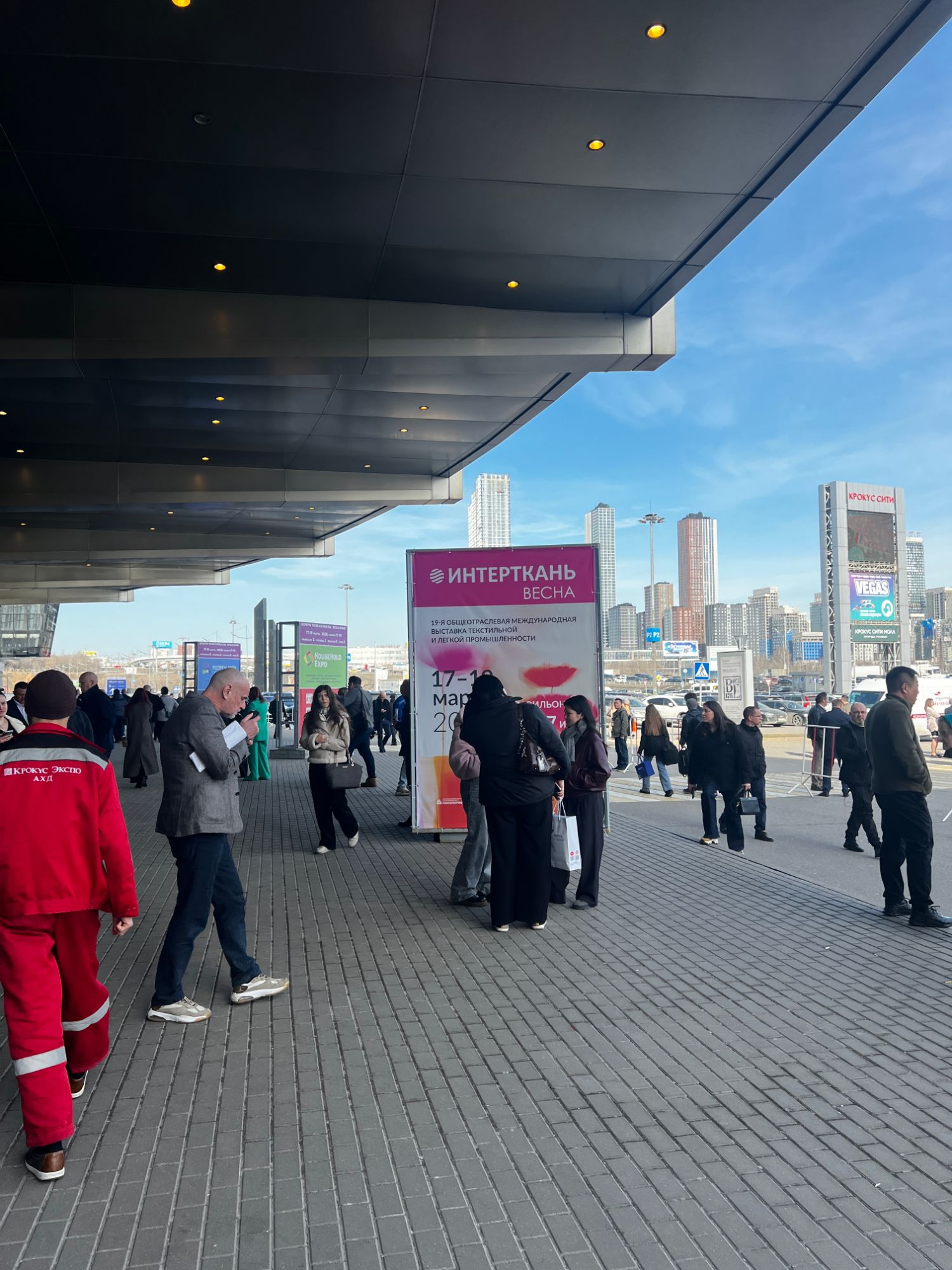
We represent Interfabric Moscow, Russia's fabric and textile sourcing show, which is where Indian mills and brands meet Russian buyers, retailers and manufacturers face to face. It's the fastest way to find the distributor for your pilot batch and to read real demand in person rather than from a spreadsheet. We cover the show in depth in our guide to Interfabric Moscow. Pair the show with Sber for payments and FESCO for freight, and you have the three pieces of a working Russia plan (see all our shows).
If you're a trade body or a manufacturing cluster wanting to take a group of members into Russia, that's something we set up too (institutional services). And for the deeper India-side data, the Apparel Export Promotion Council's Why Russia report is worth a read.
Russia is open, large, and short of exactly what India makes well: denim, knits, home textiles. The exporters who move first, with a clean payment path and a real route, get the relationships before the market crowds.
We'll put you in front of Russian buyers at Interfabric Moscow and help you build the rest of the plan around it. Apply here, or book a 30-minute call.
Sources
- Sberbank India, Russian fashion market ready for India
- Sberbank India, customs and import procedures
- Sberbank India, India-Russia cargo routes
- Business Standard, Russian banks open special vostro accounts
- FESCO, intermodal India services
- FESCO, Indian Line West (FIL-W)
- SeaNews, FESCO and SAKSHAM
- Chennai-Vladivostok Maritime Corridor (background)
- International North-South Transport Corridor (background)
- AEPC, Why Russia 2025 report