
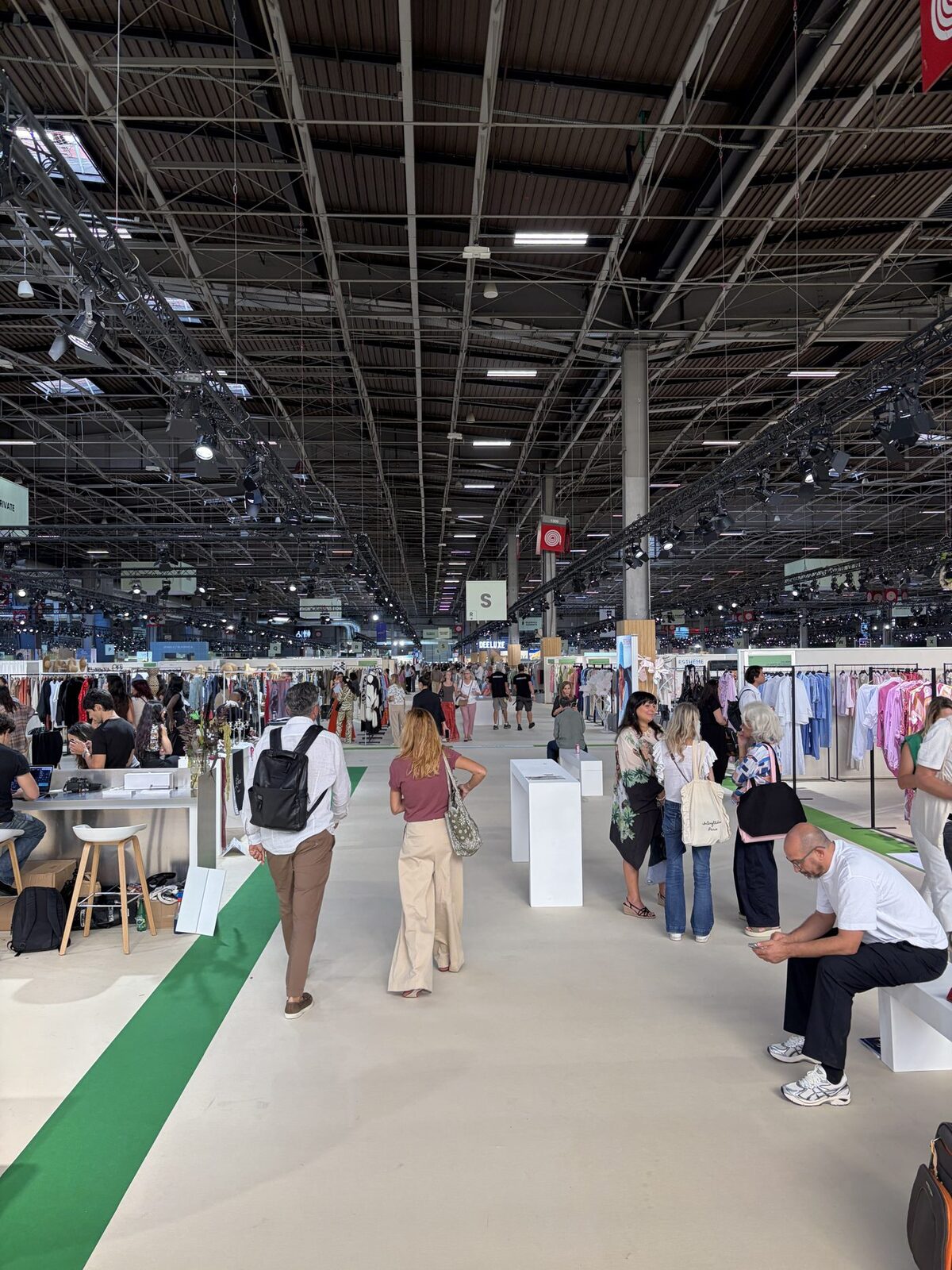
One trade show is rarely enough because European buyers wait to see if a brand comes back before they commit. The first season gets you seen, the second gets you tested, and that's usually when the orders start. Plan and budget for at least 3 editions and judge the results on the series. The one exception: if the first show tells you something is structurally wrong, fix it before you return.
What happened at our own first show?
Me-Tisse, our brand, exhibited at Who's Next every season from September 2018 until we stopped the brand in 2022. Before and since, we have kept coming as manufacturers in the sourcing and solutions section. It's the only show we do consistently, and our whole client network was built there.
At Me-Tisse's first one, in September 2018, we wrote zero orders.
We left with good conversations, a stack of contacts and a distributor in Greece. The first buyer we met that week placed an order the following season. Our slowest current client took 2 seasons from first meeting to first order.
If we had judged Who's Next on that first edition, we would have stopped in 2018.
Why do buyers wait?
Buyers have seen too many brands come once and disappear. Adding a new label means putting their money, their shelf space and their name on it. Before they do, they want proof the brand is serious.
Coming back is that proof. It tells the buyer you still exist, that you delivered, and that your handwriting holds from one season to the next. They check the same things every time: is the style consistent, is the quality the same, is the collection hierarchy still clear.
Buyers tell us this often, in nearly those words.
What does a buyer do the first time they see you?
Usually one of these:
- Takes your card or linesheet and moves on.
- Places a small test order, typically €1,000 to €3,000.
- Looks, says nothing, and comes back the next season.
None of these is a bad result. The test order is the buyer checking your delivery and how your pieces sell in their shop. The silent visitor is checking whether you'll be there again. The reorder and the bigger order come after.
What do the numbers say?
Of the Indian brands we bring to Who's Next, about 60% come back the following September.
2 patterns stand out. Returning brands write clearly more than first-timers. And a brand that comes back once almost always keeps coming.
A first Who's Next costs a typical Indian brand €8,000 to €12,000 all-in: stand, travel, stay, samples and shipping. As a one-off bet, that's a lot. Spread over 3 seasons, it reads differently. Returning exhibitors get a rebooking discount on the stand, and the second time you don't pay for the mistakes of the first (the extra samples, the display that didn't work, the shipping you quoted wrong).
In our experience, the brands that keep coming usually cover their costs by the second season.
Why is skipping January a mistake?
Many brands that return in September skip January. The reason is almost always the same: "we don't have a winter collection."
Winter is misunderstood. Who's Next is an international show with buyers from all over the world, and it's always summer somewhere. Even in Europe, people wear coats and sweaters outside, but every shop, office and home is heated. Underneath, they need lighter clothes.
Winter is mostly a colour palette. Deeper tones, warmer textures, your same shirts and dresses in a different mood. Most Indian collections can do that without adding a single new category.
Skipping January also breaks the rhythm buyers are watching. A brand that shows in September and disappears in January looks like a brand that comes once a year. Buyers notice.
When should you rethink before you come back?
Returning only works if the first show was set up right. These signs mean you fix something first:
- Wrong sector or neighbours. Your stand sat among brands at a different price point or style, and the wrong buyers walked past.
- Price out of range. Buyers liked the product and walked away at the price.
- No buyer interest at all. Hard to hear. It usually points at the collection or the choice of show.
The first one happened to us. One season, Me-Tisse was placed in the wrong brand environment and we decided to stop the show. Before leaving, we spoke with the organising team and explained our positioning. They understood, and the next season was sorted. We've been there every season since.
So talk to the organiser before you quit. Placement is often fixable. Price and product take longer, and we'll tell you honestly when that's the issue.
How do you plan for 3 seasons?
This applies to every show we represent, Who's Next, Première Classe or any other.
The plan starts before season 1. We screen every brand before it books. If we feel a brand isn't ready, we tell it not to come yet, because 3 seasons with the wrong price or the wrong collection only cost more than 1. That's why we started our own wholesale-readiness consulting with Myriam Sans-Arcidet, who spent 25 years on the buyer's side of the table: to fix the collection, the pricing and the presentation first, then bring the brand to the floor.
- Season 1: get seen. Collect a contact from everyone who enters your stand, take notes on every serious conversation, and follow up within a week.
- Season 2: get tested. Bring the pieces buyers reacted to, keep the same handwriting, and invite every season 1 contact to your stand before the show.
- Season 3: get trusted. Deliver the test orders on time. This is usually where the reorders start.
Budget for all 3 from the start. If you can only afford 1, wait a season and come in properly.
We prepare our brands for each of these seasons, from the first stand to the January collection. Read our Who's Next exhibitor playbook and our trade-show do's and don'ts, then book a 30-minute call or start your application.